Free delivery on subscription Subscribe & Save on every order Oxygen enriched Cornish spring water Pause or cancel any time

Your cart

Your cart is empty

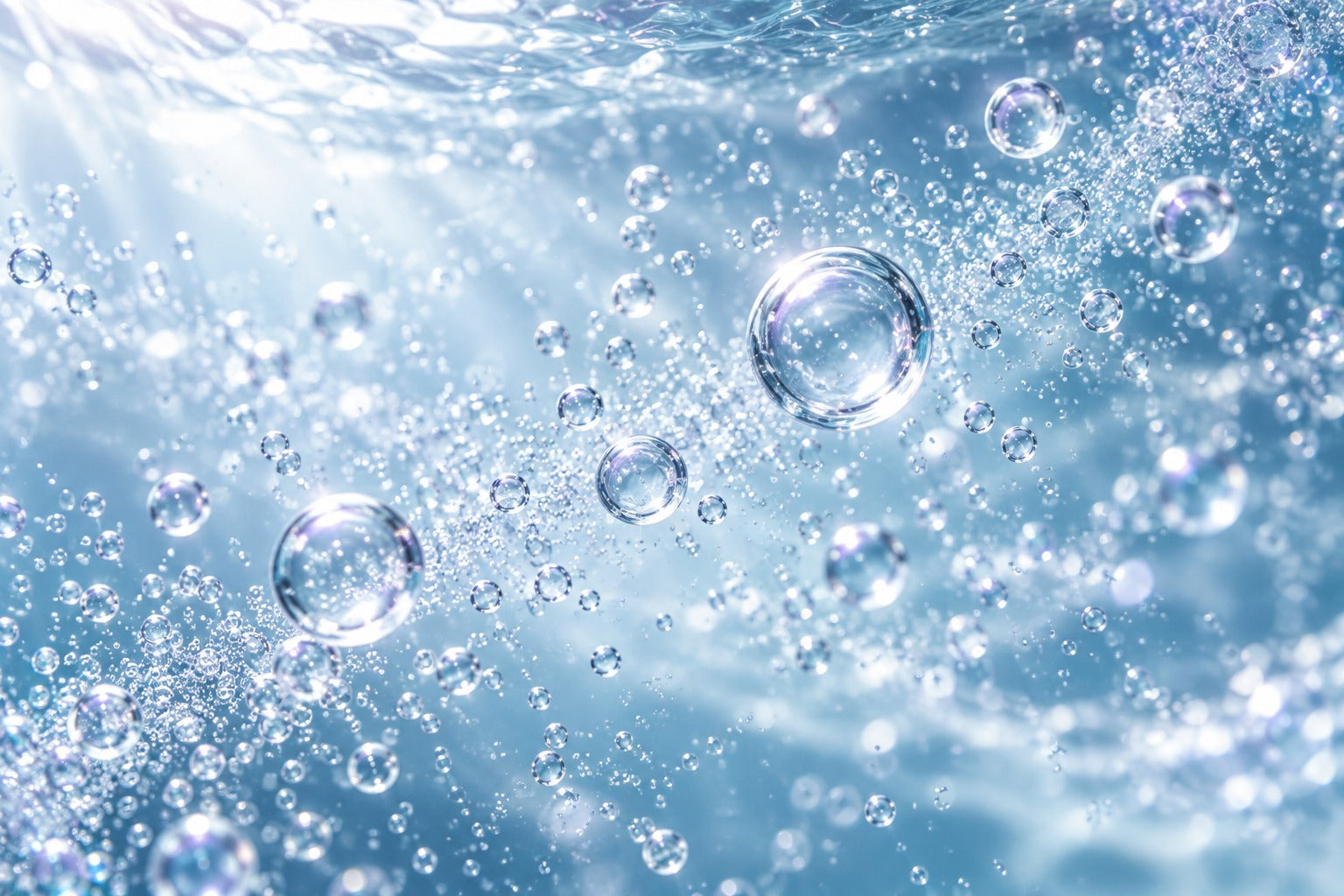
Fine oxygen bubbles suspended in clear water

Science and validation

A scientifically studied water

OxyPet uses oxygenated Cornish spring water bottled by KURE Ltd.

KURE has separately undertaken independent university research involving the water in human participants.

This research should not be interpreted as evidence of veterinary or animal-health outcomes.

The basics

Why hydration and oxygen matter

Water supports normal hydration. Oxygen supports normal cellular energy production.

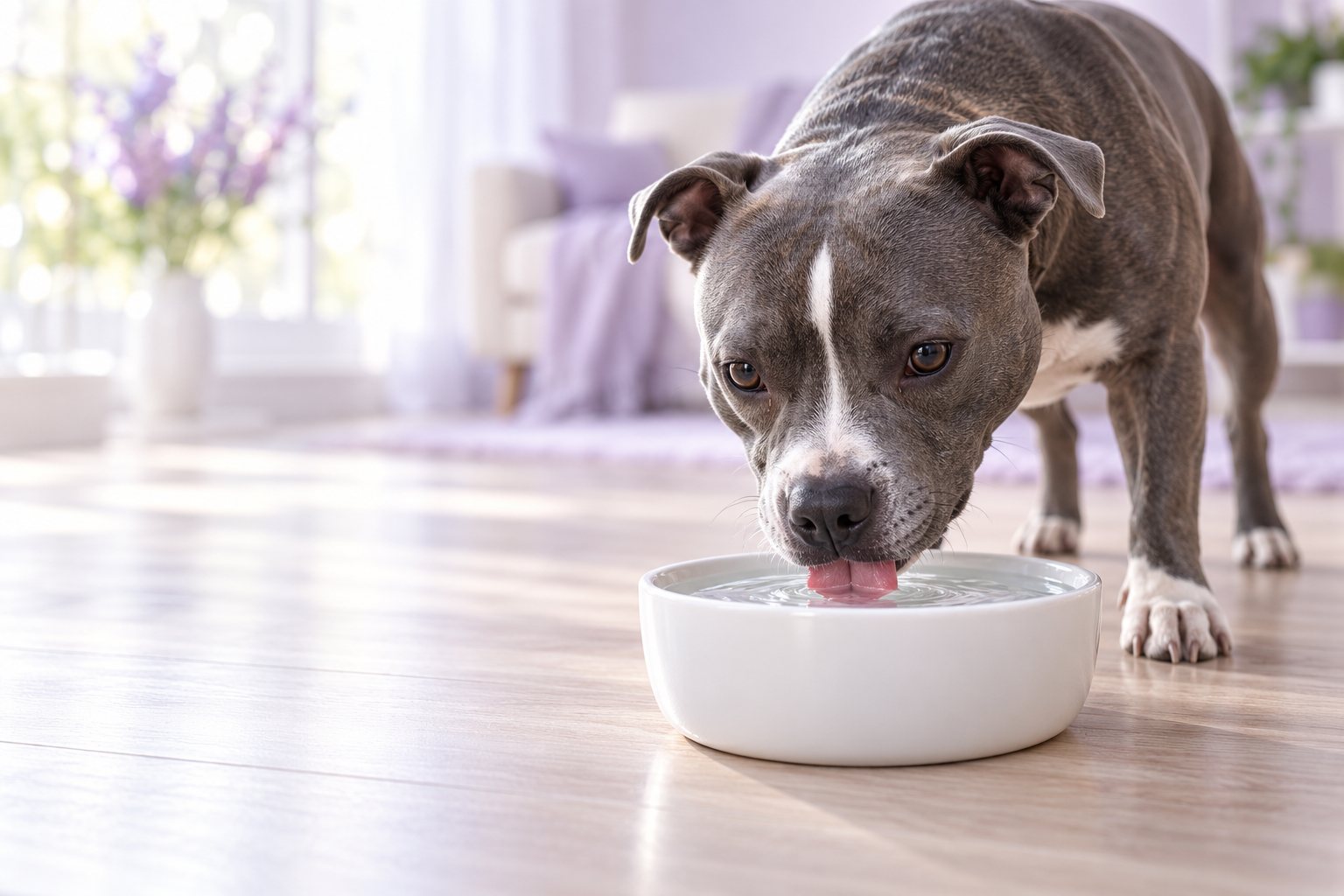
A dog drinking clear still water from a white bowl

Hydration

Why hydration matters

Water is essential to normal body function. Once consumed and absorbed through the digestive system, water contributes to the body’s fluids—including blood plasma, the fluid surrounding tissues and the fluid inside cells.

Water helps maintain normal fluid balance, blood volume and body temperature. It also provides the fluid environment needed to transport nutrients and waste around the body.

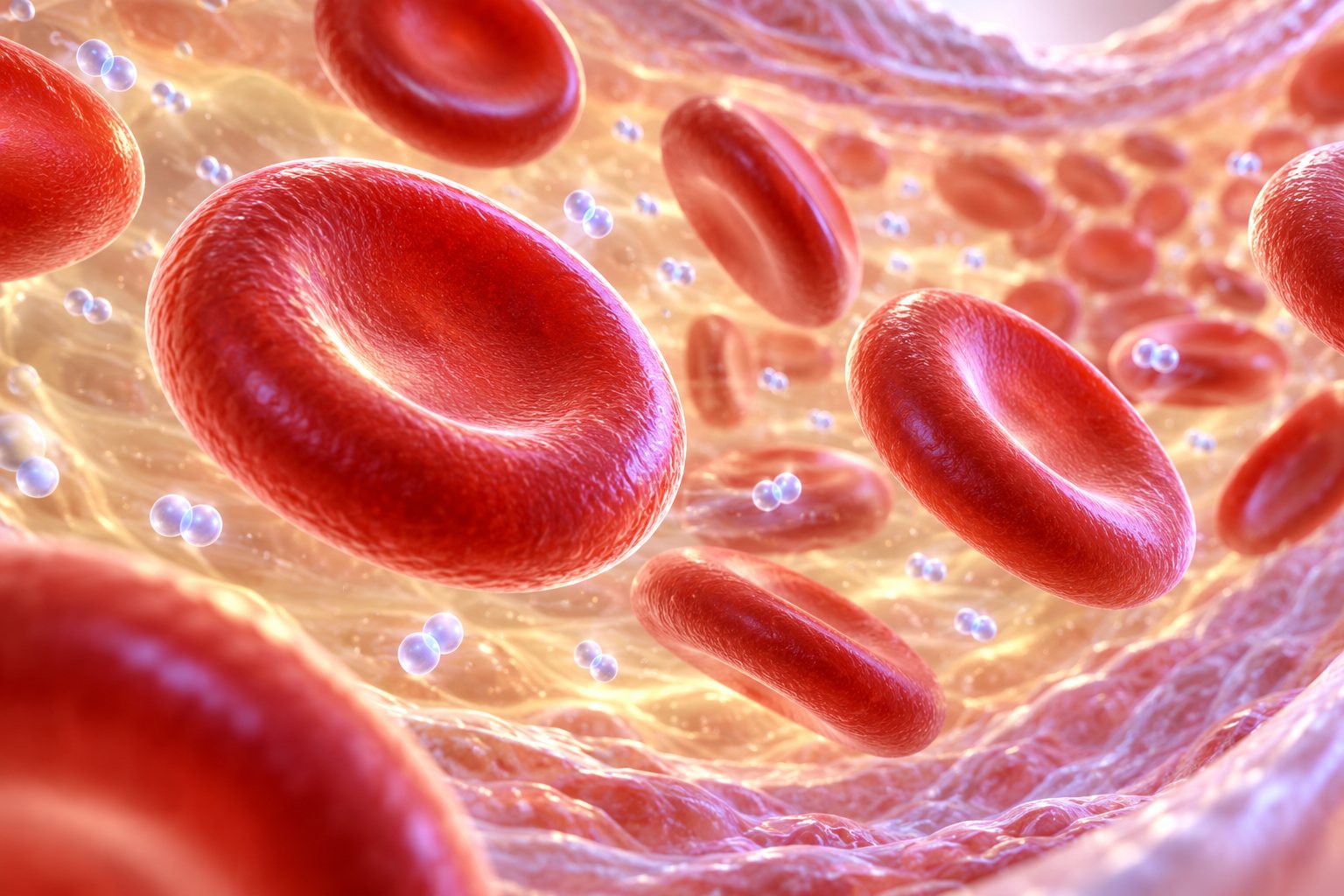
Plasma—the liquid part of blood—is mostly water. It provides the fluid environment in which red blood cells and dissolved substances are transported around the body.

A dog running across a green Cornish hillside

Oxygen

Why oxygen matters

When pets are active, their muscles use more oxygen. Breathing and circulation naturally adjust to meet this changing demand.

Most oxygen enters the bloodstream through the lungs and is carried by haemoglobin inside red blood cells. A much smaller amount is freely dissolved in plasma.

Before this inhaled oxygen moves from the blood into surrounding tissues, it is released from haemoglobin and dissolves in the plasma. As tissues use oxygen, haemoglobin releases more, allowing this normal process to continue. Once inside cells, oxygen supports normal energy production.

Red blood cells travelling through plasma, with a small amount of oxygen dissolved between them

How inhaled oxygen reaches the body’s cells

  1. Lungs

    Most oxygen enters the bloodstream through the lungs.

  2. Red blood cells

    It is carried by haemoglobin inside red blood cells. A much smaller amount is freely dissolved in plasma.

  3. Plasma

    Before moving into surrounding tissues, oxygen is released from haemoglobin and dissolves in the plasma.

  4. Tissues and cells

    As tissues use oxygen, haemoglobin releases more. Once inside cells, oxygen supports normal energy production.

Hydration and oxygen have different but connected roles in normal physiology: water helps maintain the fluid environment through which blood circulates, while oxygen is supplied principally through the lungs.

The lungs remain the body’s principal source of oxygen. Dissolved oxygen in drinking water is a separate characteristic of the water itself.

Dissolved oxygen

Dissolved oxygen explained

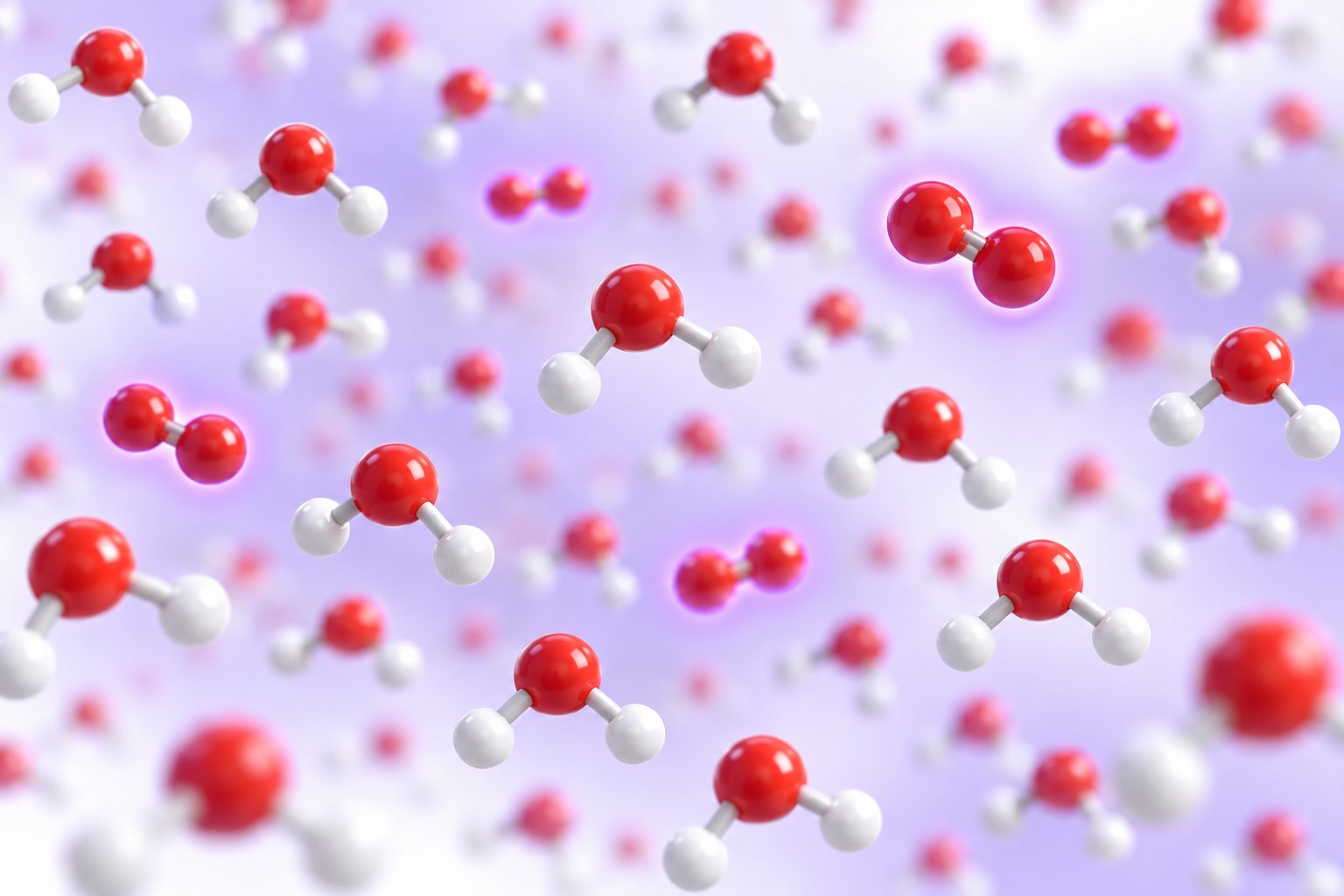
All water is H₂O, but this is not the same as dissolved oxygen.

In H₂O, the oxygen atom is chemically bound to hydrogen. Dissolved oxygen refers to separate O₂ molecules held within the water.

Different waters contain different amounts of dissolved oxygen. These levels can also change depending on temperature, storage and handling.

Water molecules, each one oxygen atom bound to two hydrogen atoms, with separate oxygen molecules held between them
H₂O Oxygen bound to hydrogen O₂ Separate dissolved oxygen
Clear spring water running over mossy rocks in Cornwall

What makes OxyPet different

OxyPet is natural Cornish spring water sourced from rural Cornwall and enriched with oxygen using stable nano-bubble technology.

OxyPet’s measurable difference is its substantially higher concentration of dissolved oxygen.

Independent laboratory testing recorded the following dissolved-oxygen levels in the samples tested:

  • OxyPet 120–140 mg/L
  • Natural spring water 8.6 mg/L
  • Bottled water 6–8 mg/L
  • Tap water 6 mg/L

At least 10×

Based on these results, OxyPet contained at least 10× the dissolved oxygen measured in each of the tap, bottled and spring-water samples tested.

Results relate to the specific samples and testing conditions. Dissolved-oxygen levels can vary with storage, handling and time.

Nano-bubbles

Stable nano-bubble oxygen

The ultra-fine oxygen bubbles—known as nano-bubbles—remain dispersed within the water rather than rapidly rising and escaping.

This helps retain OxyPet’s higher measured dissolved-oxygen level over time.

The unopened product has a best-before period of up to two years from bottling when stored as directed.

Carbonated drinks

Rise and escape.

OxyPet oxygen water

Remain suspended.

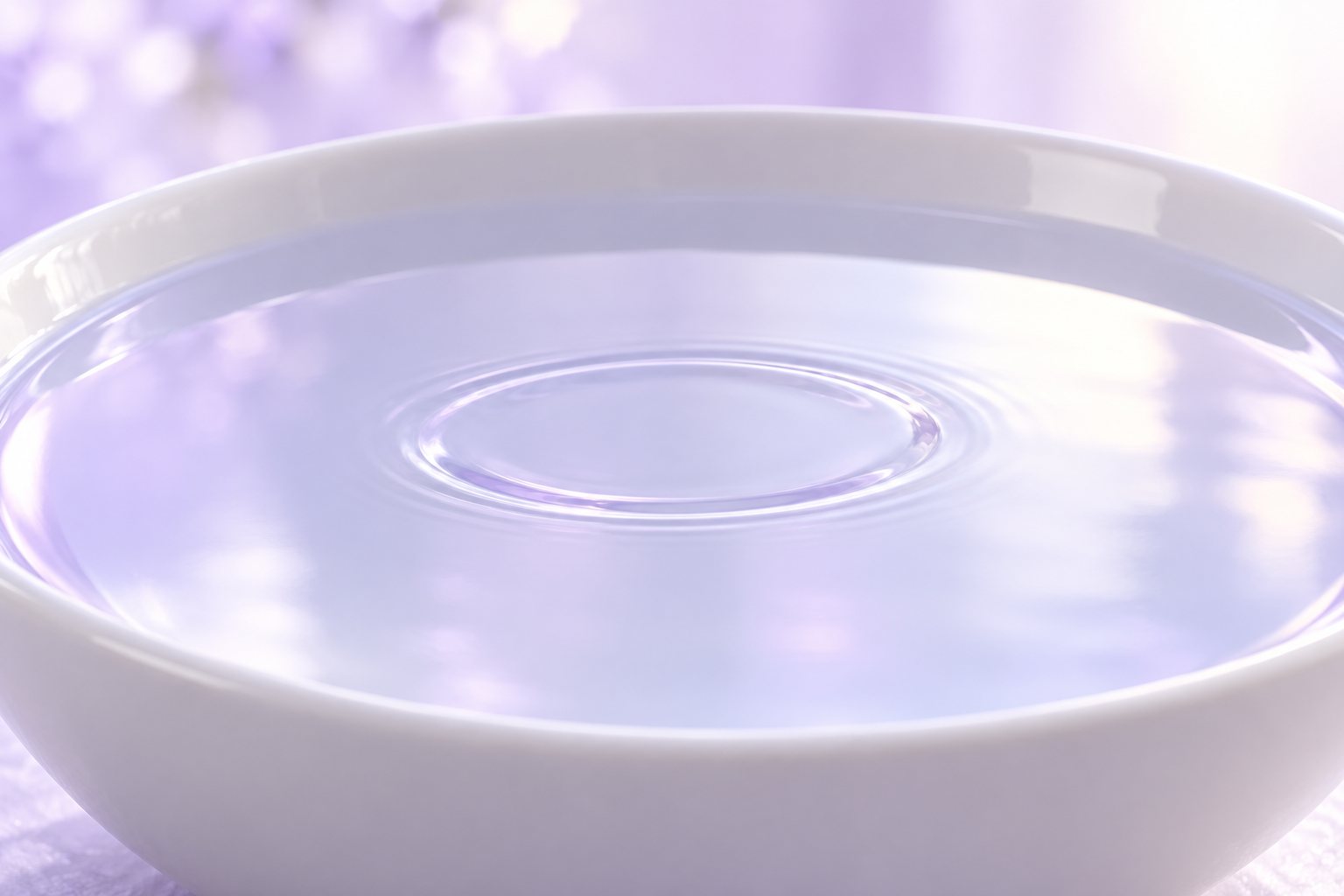
The smooth, still surface of clear water in a white bowl, with no fizz

Still, smooth and non-carbonated

OxyPet remains completely still and smooth, without the fizz associated with carbonated water.

It is natural Cornish spring water enriched with oxygen—made for easy, everyday pet drinking.

UK-patented technology

OxyPet uses UK-patented nano-bubble technology developed by KURE.

Related human research

KURE has commissioned controlled university research into its oxygen-enriched water in adult human participants.

These studies contribute to the developing research into oxygen-enriched water.

View KURE’s human research

Human studies · External website

Independent lab testing

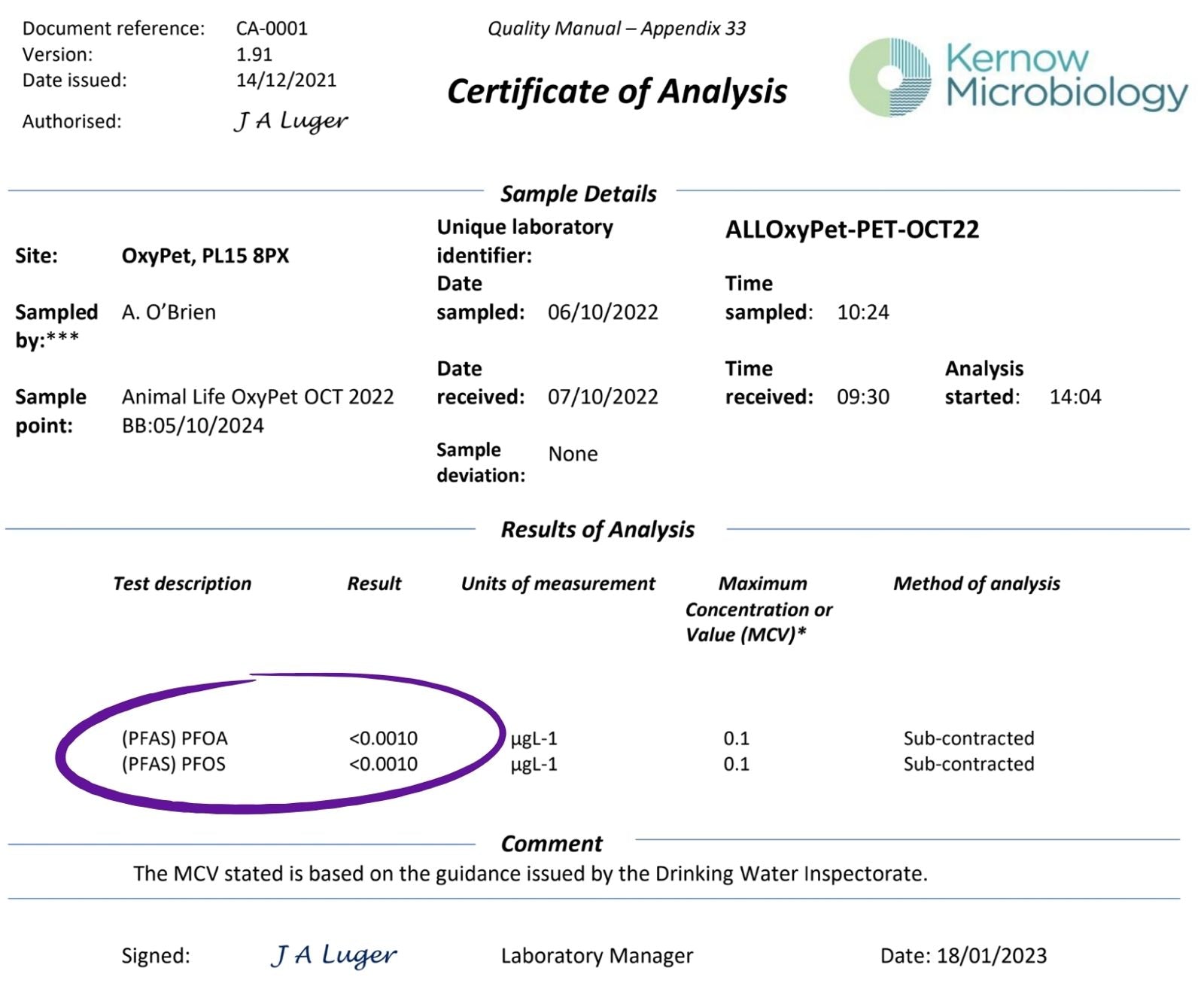
OxyPet is the only independently verified water for pets that is free from forever chemicals

The supplied Certificate of Analysis reports PFOA and PFOS below 0.0010 µg/L in the OxyPet sample tested.

Results relate to the sample shown on the certificate.

OxyPet Certificate of Analysis showing PFOA and PFOS test results

Our next step

Building our own veterinary evidence

We are committed to developing independent research specifically in animals, to further understand the potential benefits of oxygenated water for pet health and wellbeing.